What feels distinctly different about this moment is the absence of urgency. There is no anxiety to be seen, no pressure to perform identity for external validation.
Designers are working from a place of assurance, allowing context to exist without flattening it.The work feels global not because it abandons where it comes from, but because it refuses to simplify it.
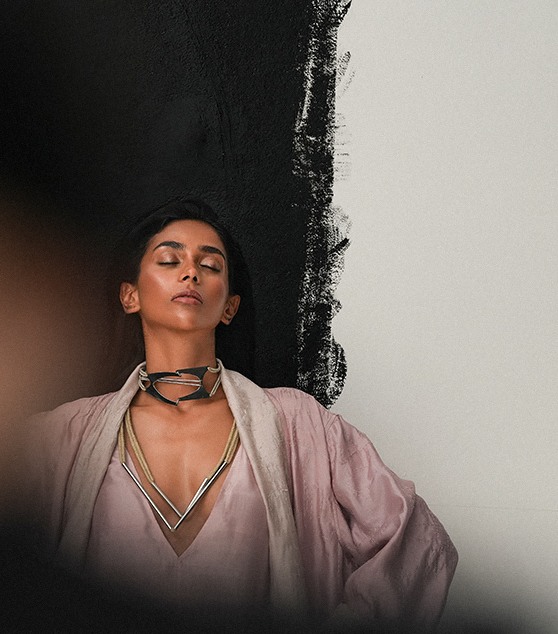
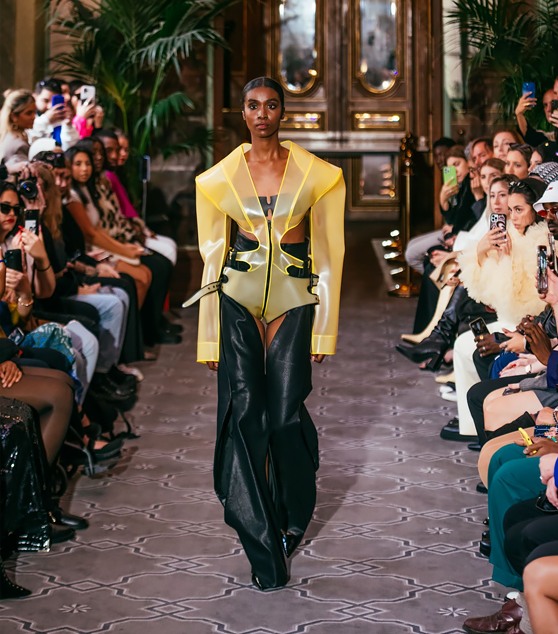
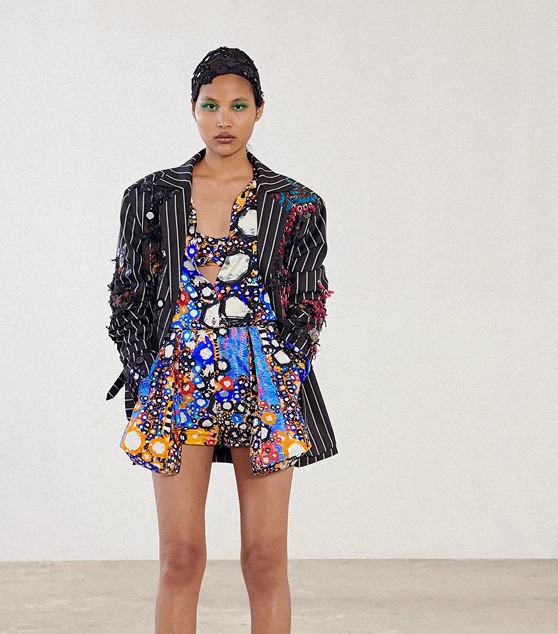
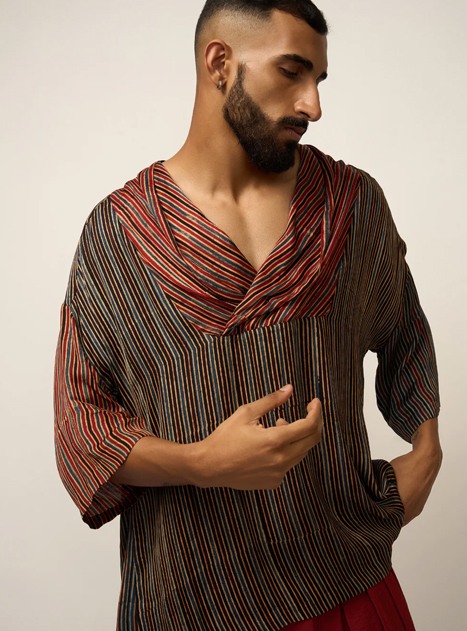
You see this sensibility in labels that move fluidly between handcraft and contemporary form — in the work of Urvashi Kaur, for instance, where relaxed silhouettes and tactile textiles feel intuitive across geographies.
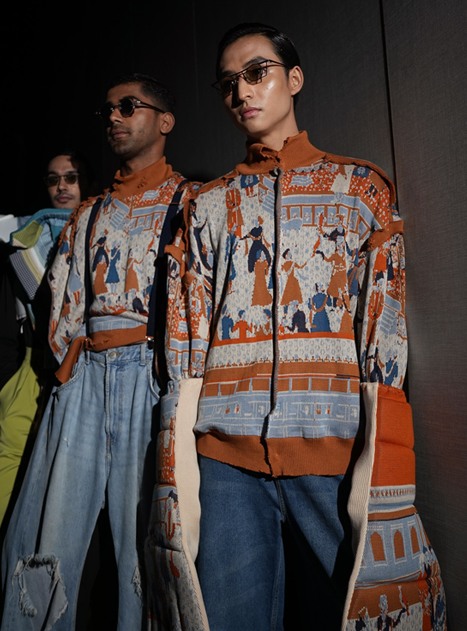
Her garments don’t perform tradition; they live within it. Similarly, Saaksha & Kinni, led by Saaksha Bhat and Kinnari Kamat, approach print with a lightness that feels unmistakably current.
Their patterns are graphic yet softened, expressive without excess, allowing the wearer to carry the story rather than the garment carrying it alone.
Craft itself has also shifted position. No longer treated as ornament or nostalgia, technique becomes a site of innovation.
Texture replaces surface decoration. Construction carries as much meaning as concept.
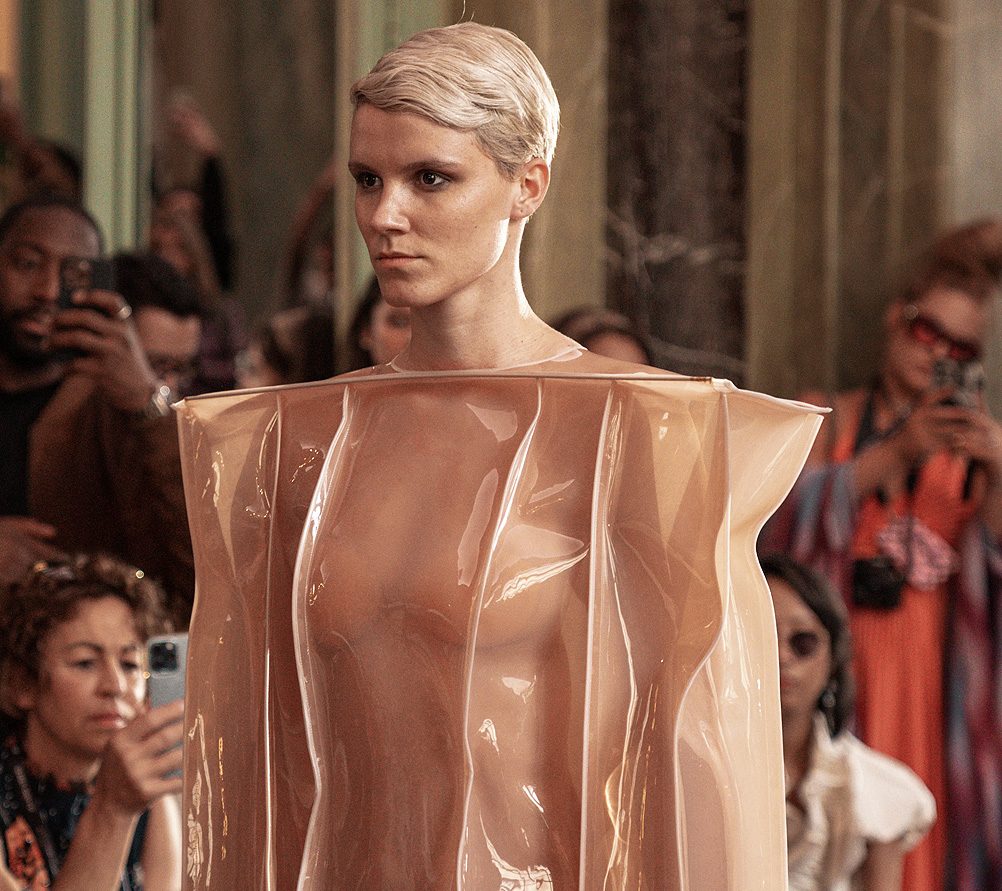
Designers like Anurag Gupta engage with material in sculptural, modern ways, positioning craft as a living, evolving language rather than a reference point.
These garments speak to an international audience fluent in design; one that values how something is made as much as how it looks.
Another reason this work travels is its understanding of contemporary life. Clothing today must move; between cities, climates and contexts, without losing integrity. It needs to adapt rather than perform.
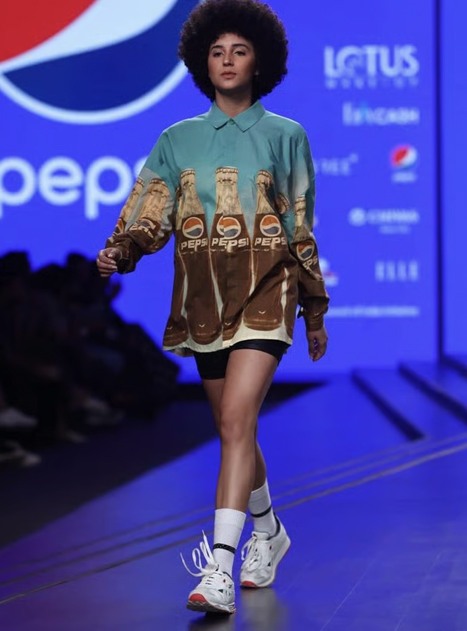
Brands such as Huemn, founded by Pranav Kirti Misra and Shyma Shetty, respond to this reality with oversized silhouettes, graphic elements and cultural commentary that feel instinctively aligned with global youth culture.
Yet the work remains grounded, anchored in Indian experience without being confined by it.
Menswear, too, has undergone a quiet recalibration. The emphasis has shifted toward function, proportion and honesty. There is less interest in styling for effect and more in designing for use.
Labels like Khanijo, led by Gaurav Khanijo, draw from uniforms and workwear to create clothes that feel familiar wherever they are worn. The appeal lies in their clarity; garments that prioritise comfort, purpose and longevity over spectacle.